One in three American adults does not get the minimum seven hours of sleep recommended by the CDC and the American Academy of Sleep Medicine. Among professionals in management roles, the number is worse: research published in Frontiers in Psychology found that more than 40% of individuals in management and enterprise leadership average fewer than six hours a night.
The gap between knowing sleep matters and actually falling asleep is where the frustration lives. Executives who spend all day making high-stakes decisions often find that the same mental intensity that fuels their performance follows them into the bedroom, keeping them alert long after the lights go out. The problem is not laziness or a lack of discipline. It is a nervous system that has not received the signal to stand down.
This guide covers what science actually supports for falling asleep faster, staying asleep longer, and building a sleep routine that holds up under the pressure of a demanding career.
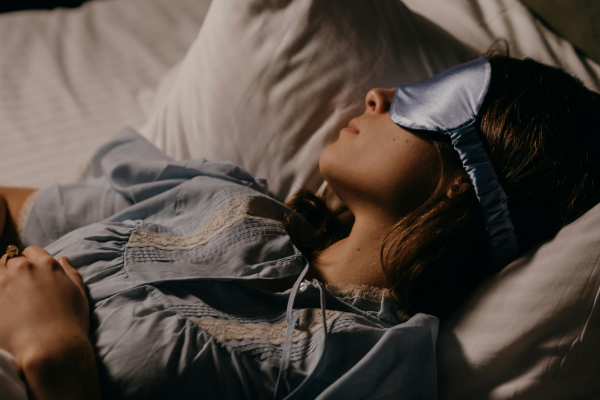
Why Falling Asleep Feels So Difficult
Healthy adults typically fall asleep within 10 to 20 minutes of lying down. If the process consistently takes longer than 30 minutes, clinicians refer to it as sleep-onset insomnia, a condition affecting up to 14.5% of American adults most nights, according to the National Health Interview Survey.
Several factors converge to make falling asleep harder than it should be:
- Hyperarousal. Stress hormones like cortisol and adrenaline prime the body for action. In high-pressure roles, this arousal system can remain elevated well into the evening, making it physiologically difficult for the brain to transition into sleep.
- Blue light exposure. Screens emit short-wavelength blue light that suppresses melatonin production. Checking email or reviewing reports before bed delays the body’s internal clock, pushing the natural onset of sleepiness later.
- Irregular schedules. Travel across time zones, late dinners with clients, and inconsistent wake times erode the circadian rhythm, the body’s 24-hour internal clock that governs when alertness rises and falls.
- Sleep performance anxiety. The pressure to fall asleep can paradoxically keep a person awake. Research published in Behavioural and Cognitive Psychotherapy has documented this effect, finding that the harder someone tries to sleep, the more their arousal increases.
Understanding the mechanism matters because the solution is not willpower. It is a deliberate shift from sympathetic (“fight or flight”) nervous system dominance to parasympathetic (“rest and digest”) activation.
How to Fall Asleep Faster: Techniques That Work
The techniques below are grounded in clinical evidence. They work by targeting the two primary barriers to sleep onset: physical tension and mental overactivity.
The 4-7-8 Breathing Method
Developed by an integrative medicine physician and rooted in pranayama breathing exercises, this technique activates the parasympathetic nervous system and lowers heart rate.
- Place the tip of the tongue against the ridge behind the upper front teeth.
- Exhale completely through the mouth.
- Inhale quietly through the nose for a count of four.
- Hold the breath for a count of seven.
- Exhale through the mouth for a count of eight, making an audible whooshing sound.
- Repeat for four full cycles.
The extended exhale is the key. A longer out-breath relative to the in-breath stimulates the vagus nerve, which signals the brain to slow down. For professionals who spend the day in a state of high alertness, this is one of the fastest ways to manually downshift the nervous system before sleep.
Progressive Muscle Relaxation (PMR)
Progressive muscle relaxation works by systematically tensing and releasing each major muscle group, from the forehead to the toes. By deliberately creating and then releasing tension, the body registers the contrast and settles into a deeper state of physical calm.
- Starting at the forehead, tense the muscles tightly for five seconds.
- Release and notice the sensation of relaxation for 10 to 15 seconds.
- Move downward: eyes, jaw, neck, shoulders, arms, hands, chest, abdomen, thighs, calves, and feet.
A 2021 meta-analysis found that slow breathing combined with relaxation methods like PMR may be more effective for treating insomnia than some pharmacological interventions. The technique requires no equipment, no app, and about 10 minutes.
The Military Sleep Method
Originally described in Bud Winter’s 1981 book Relax and Win: Championship Performance, this method was developed to help Navy pilots fall asleep quickly under stressful conditions. While the specific claims of the military sleep method lack rigorous peer-reviewed validation, the component techniques (muscle relaxation, controlled breathing, and visualization) are each individually supported by research.
The method combines several steps:
- Relax the entire face, including the muscles around the eyes, jaw, and tongue.
- Drop the shoulders and let both arms go limp, one side at a time.
- Exhale slowly, relaxing the chest.
- Relax the legs, moving from the thighs to the calves to the feet.
- Clear the mind for 10 seconds by picturing a calm scene, such as lying in a canoe on a quiet lake or resting in a dark, warm room.
Proponents report a 96% success rate after six weeks of consistent practice. Even if that figure is generous, the underlying principle is sound: reducing physical tension while occupying the mind with a neutral image interrupts the cycle of rumination that keeps most people awake.
Paradoxical Intention
Research from 2021 suggests that paradoxical intention, a technique in which a person deliberately tries to stay awake while lying in bed, can reduce sleep performance anxiety and improve the subjective perception of feeling well-rested. By removing the pressure to fall asleep, the body relaxes naturally.
For executives accustomed to chasing performance metrics, this counterintuitive approach can be particularly effective. The instruction is simple: lie in bed with the lights off and calmly decide not to sleep. Let the eyes stay open. The goal is to remove effort from the equation entirely.
Sleep Hygiene: Building an Environment That Promotes Sleep
Techniques get someone to sleep on any given night. Sleep hygiene is what makes it happen consistently. The term refers to the collection of habits and environmental conditions that support predictable, high-quality sleep over time.
Optimize the Bedroom
The sleep environment has a measurable impact on how quickly a person falls asleep and how deeply they stay asleep.
- Temperature: The ideal bedroom temperature for most adults falls between 60 and 67°F. A 2023 study found that older adults may sleep better at slightly warmer temperatures, between 68 and 77°F, but cooler rooms generally produce better sleep quality across age groups. The body’s core temperature drops naturally as part of the sleep-onset process; a cool room supports that drop.
- Darkness: Any ambient light, including standby LEDs, streetlights, and device screens, can suppress melatonin. Blackout curtains or a high-quality sleep mask can eliminate this variable.
- Noise: If complete silence is not possible, a white noise machine or earplugs can reduce the frequency and intensity of nighttime disruptions.
Establish a Consistent Schedule
Going to bed and waking up at the same time every day, including weekends, reinforces the circadian rhythm. The body’s internal clock relies on consistency. When wake times shift by an hour or more on weekends, it creates a form of social jet lag that makes Monday morning feel like a transatlantic flight.
The CDC recommends that adults aged 18 to 60 get seven or more hours of sleep per night. For adults 61 to 64, the recommendation is seven to nine hours. The specific number matters less than the consistency: a person who sleeps seven hours at the same time each night will generally feel more rested than someone who sleeps eight hours on an erratic schedule.
Control Light Exposure
Light is the most powerful external regulator of the circadian clock. Two rules apply:
- Morning: Get exposure to natural sunlight within the first 30 to 60 minutes after waking. This sets the circadian clock and promotes alertness during the day.
- Evening: Reduce screen brightness and avoid screens entirely for at least 30 minutes before bed. If late-night email is unavoidable, blue-light-filtering glasses or device settings that shift the screen spectrum toward warmer tones can reduce melatonin suppression.
Watch What and When You Eat and Drink
Caffeine has a half-life of approximately five hours, meaning a cup of coffee consumed at 3:00 PM still has half its caffeine content circulating at 8:00 PM. For professionals who rely on afternoon coffee, cutting off caffeine intake by early afternoon can make a significant difference in how quickly they fall asleep.
Alcohol, though often perceived as a sleep aid, fragments sleep architecture. It may help a person fall asleep initially, but it disrupts REM sleep later in the night, resulting in lighter, less restorative rest. Large meals close to bedtime can also interfere with sleep by promoting acid reflux and requiring the digestive system to stay active when it should be winding down.
Exercise, But Time It Right
Regular physical activity improves both sleep quality and sleep duration. The timing, however, matters. Vigorous exercise within two to three hours of bedtime can elevate core body temperature and adrenaline levels, making it harder to fall asleep. Morning or midday exercise is ideal, with the additional benefit of natural light exposure if done outdoors.
What to Do When You Wake Up and Cannot Fall Back Asleep
Waking once or twice during the night is a normal part of the sleep cycle. The problem arises when waking leads to extended periods of lying in bed, alert and frustrated.
Sleep specialists recommend the “20-minute rule”: if sleep does not return within roughly 20 minutes, get out of bed. Move to a dimly lit room and engage in a quiet, low-stimulation activity, such as reading a physical book, listening to calm music, or doing light stretching. Avoid screens. Return to bed only when drowsiness returns.
The reasoning is behavioral: lying awake in bed for extended periods trains the brain to associate the bed with wakefulness. Getting up and returning when sleepy reinforces the association between bed and sleep, a principle central to cognitive behavioral therapy for insomnia (CBT-I), which is considered the first-line treatment for chronic insomnia by the American College of Physicians.
When Difficulty Sleeping Signals Something Larger
Not all sleep problems respond to better habits. Persistent difficulty falling asleep or staying asleep, especially when paired with other symptoms, may point to an underlying condition that requires medical evaluation.
Red flags that warrant professional assessment include:
- Taking more than 30 minutes to fall asleep most nights of the week
- Waking up gasping, choking, or snoring loudly (potential indicators of sleep apnea)
- Falling asleep involuntarily during meetings, while driving, or during conversations
- Persistent daytime fatigue despite spending adequate time in bed
- Frequent nightmares or sleepwalking
Sleep apnea is particularly relevant for executives, as risk factors include high stress, weight gain, and the cardiovascular strain associated with high-pressure careers. Left untreated, it raises the risk of hypertension, heart attack, stroke, and type 2 diabetes.
The Professional Cost of Poor Sleep
Sleep deprivation is not merely a health issue. It is a performance issue. Research from Harvard Business Review reports that meta-analytic studies consistently identify sleep deprivation as a strong inhibitor of workplace performance, primarily through its effect on mood, attention, and decision-making capacity.
A study from Hult International Business School surveyed more than 1,000 professionals and found that over half reported struggling to stay focused in meetings, needing longer to complete tasks, and finding it harder to generate new ideas when sleep-deprived. Separate research has found that sleeping five to six hours a night makes a person approximately 19% less productive than someone who sleeps seven to eight hours, and sleeping fewer than five hours reduces productivity by nearly 30%.
For executives whose decisions carry outsized consequences, the cognitive impairment from chronic sleep loss, including diminished judgment, slower reaction time, and reduced emotional regulation, represents a compounding liability. Seventeen hours of sustained wakefulness has been shown to produce behavioral changes equivalent to a blood alcohol content considered legally impaired in many contexts.
Sleep as a Component of Preventive Health
Sleep is one of the most consequential yet underexamined variables in executive health. It influences cardiovascular risk, metabolic function, immune defense, cognitive performance, and emotional stability. When these systems are evaluated in isolation, they often appear unrelated. When examined alongside sleep data, patterns emerge.
Hoag Executive Health incorporates sleep quality assessment into its comprehensive executive physical, a half-day evaluation designed to give executives a detailed understanding of their current health status and risk trajectory. The program’s board-certified physicians review sleep patterns alongside cardiovascular markers, metabolic panels, and other diagnostics to build a complete picture, not just of how the body is performing today, but of where it is heading.
For executives whose sleep problems are accompanied by cardiovascular risk factors, Hoag Executive Health also offers advanced cardiovascular screenings and preventive imaging that go beyond standard workups. These screenings can identify early-stage conditions that poor sleep may be accelerating.
Schedule your executive physical with Hoag Executive Health to understand how sleep quality fits into your broader health profile, and what to do about it.